3 Claude Code Design Skills That Fix AI-Made UI: Impeccable, Taste Skill and Emil Kowalski
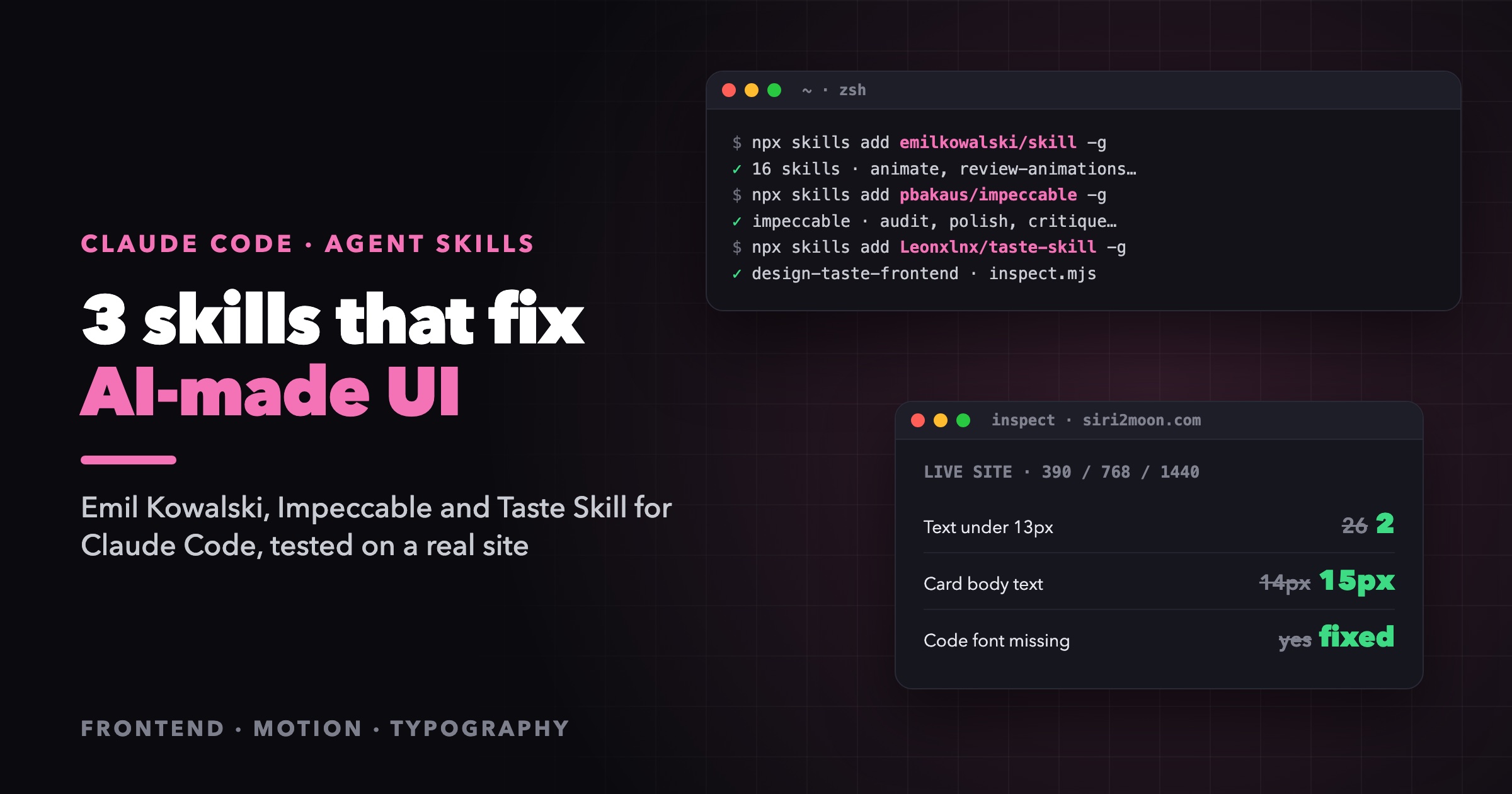
Install Emil Kowalski's skills, Impeccable and Taste Skill in Claude Code, learn when to use each, and see what happened when they audited a real site.
26 articles in this topic.
Install Emil Kowalski's skills, Impeccable and Taste Skill in Claude Code, learn when to use each, and see what happened when they audited a real site.
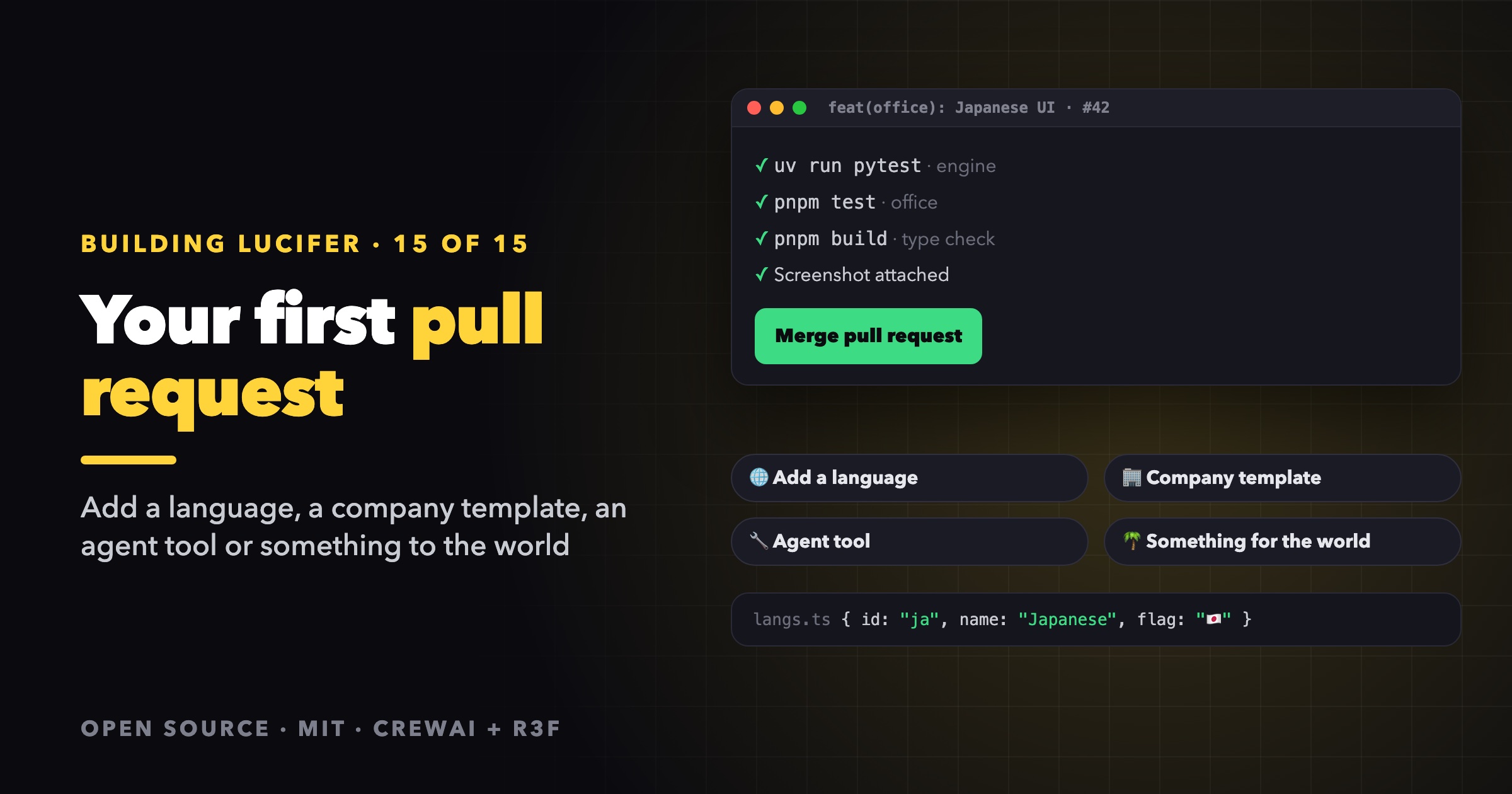
Set up both packages, pick a first issue, and ship it: add a language, a company template, an agent tool or a new world. The checks to run, the rules that keep the project healthy and how to open a good PR.
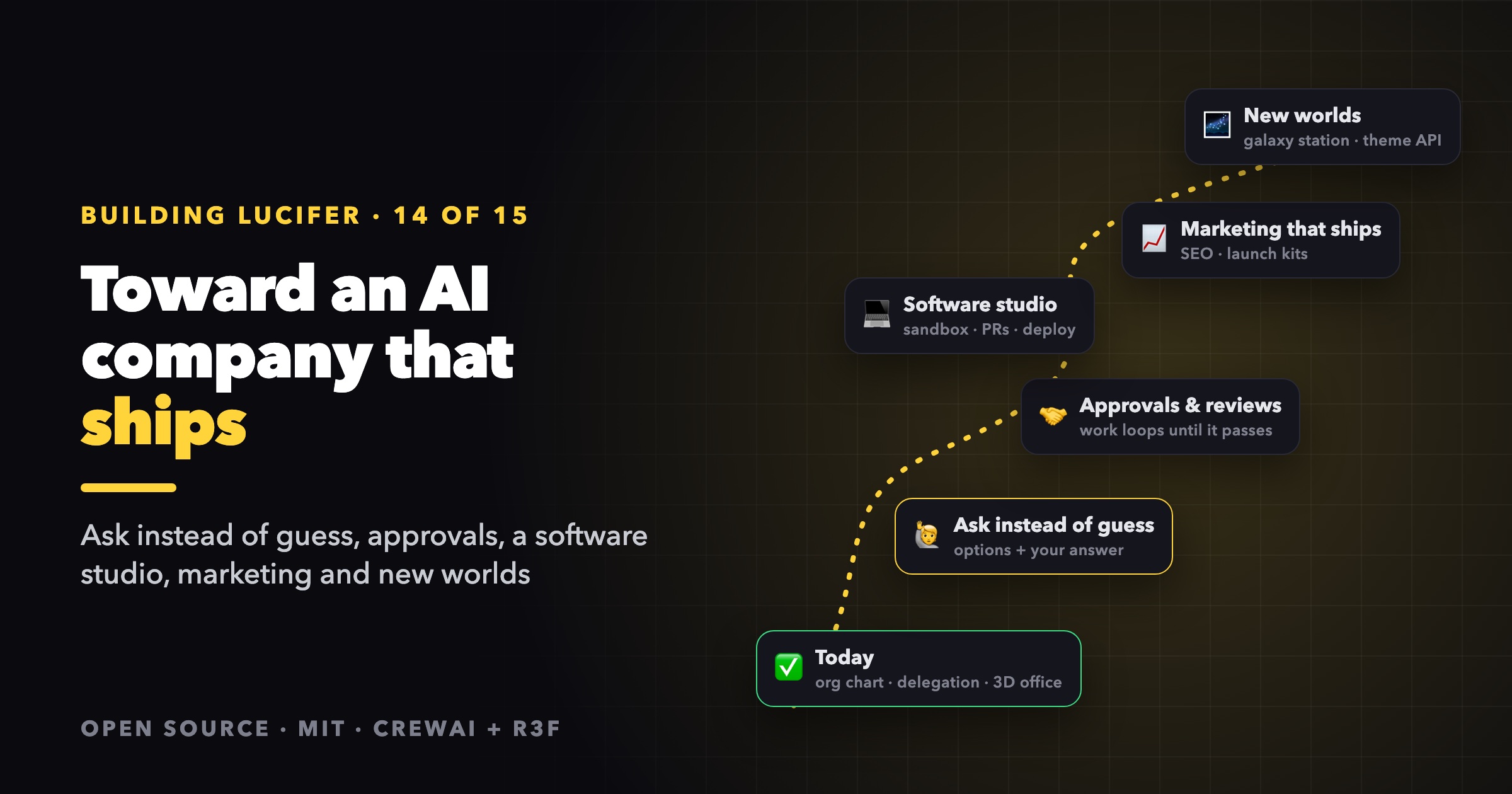
Where Lucifer goes next: agents that ask instead of guess, approvals and review loops, real video and image production, a software studio that deploys, marketing that brings users, and new worlds beyond the yacht.
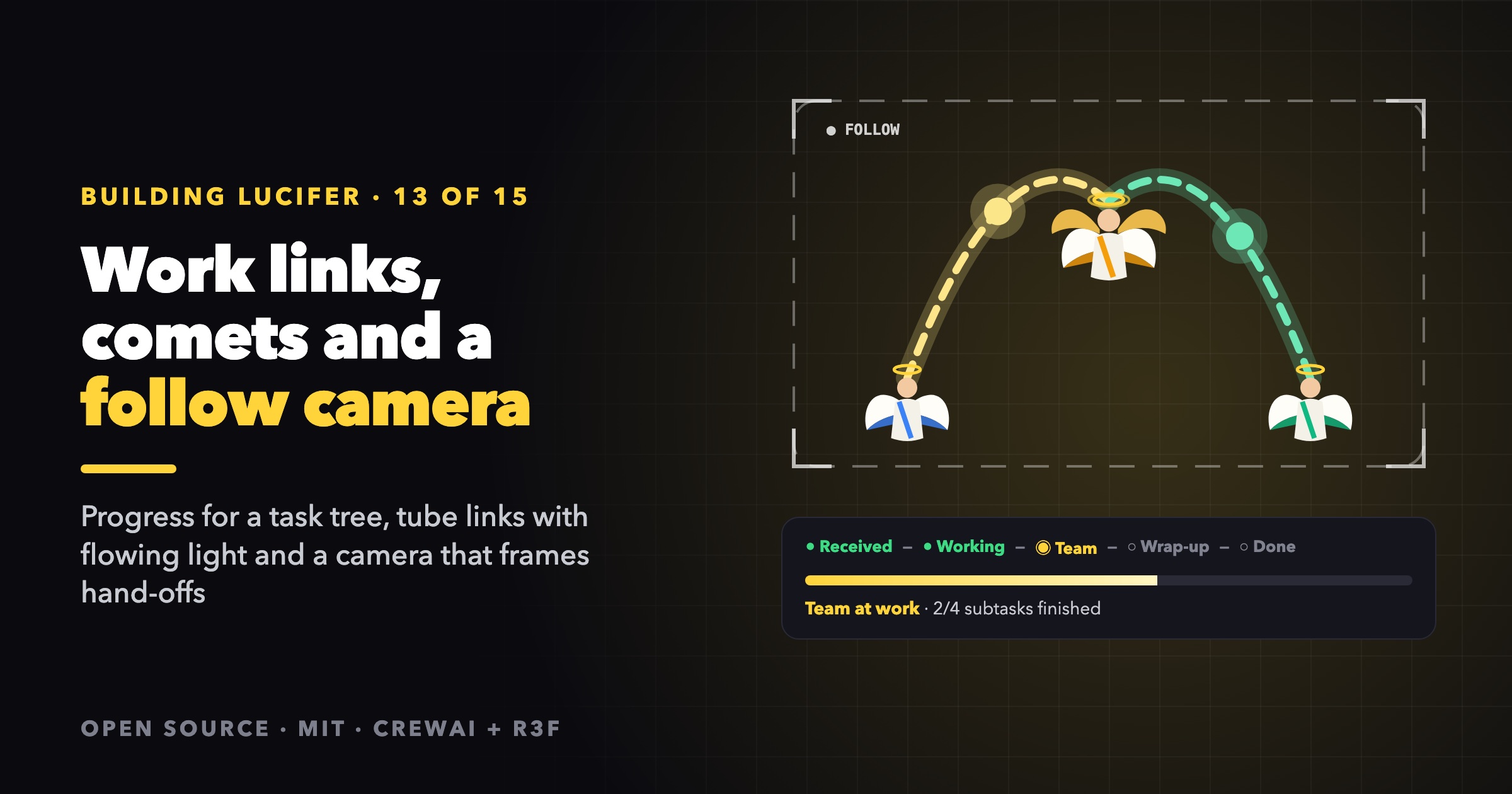
Making agent work visible: progress for a whole task tree, phases an owner understands, glowing tube links with flowing light, comets for every hand-off, and a camera that frames the work with a bounding sphere.
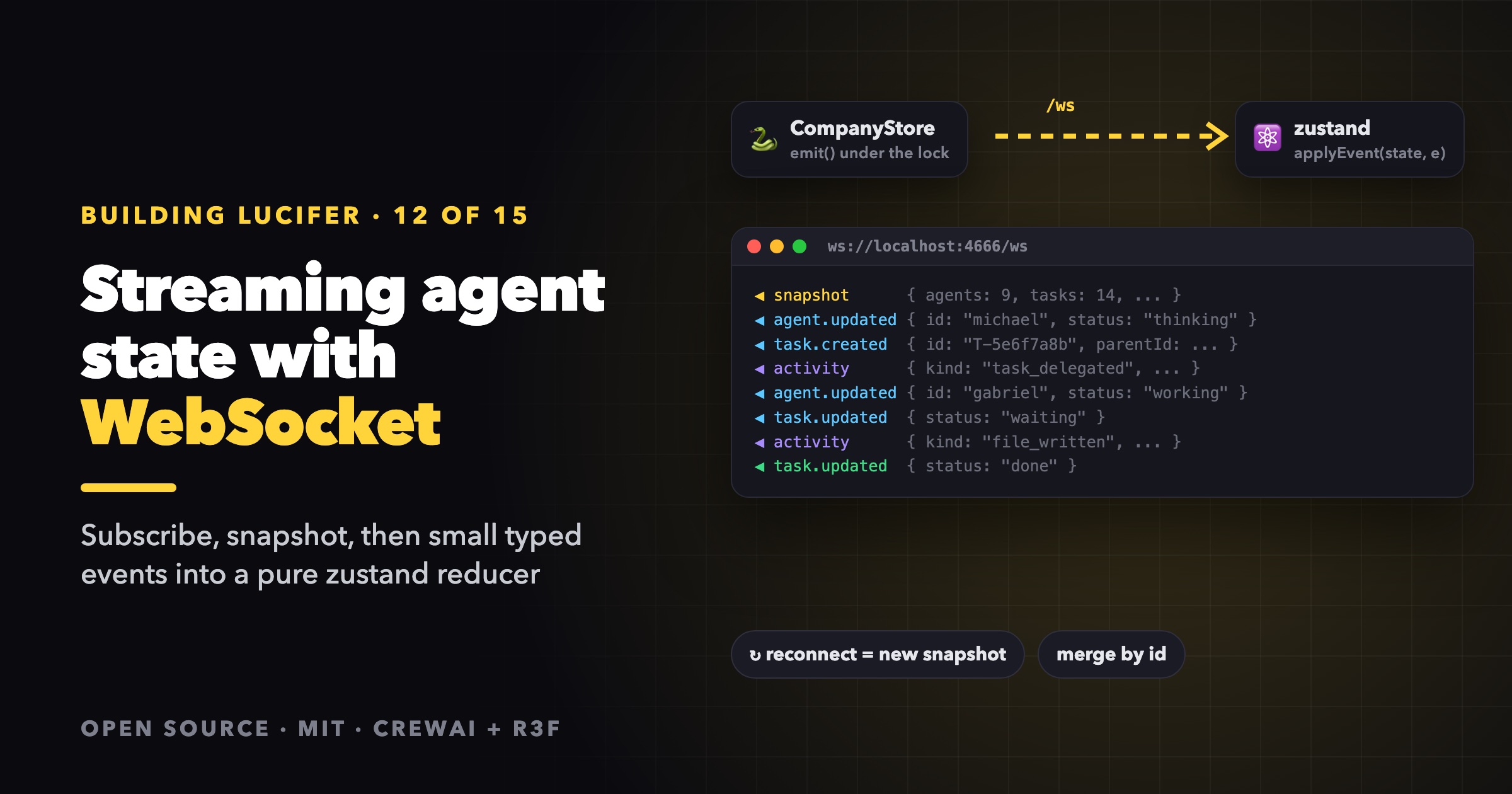
A snapshot on connect, then small typed events: how Lucifer keeps a 3D office in sync with a multi-threaded Python engine, with no missed updates, cheap reconnects and a pure reducer you can unit test.
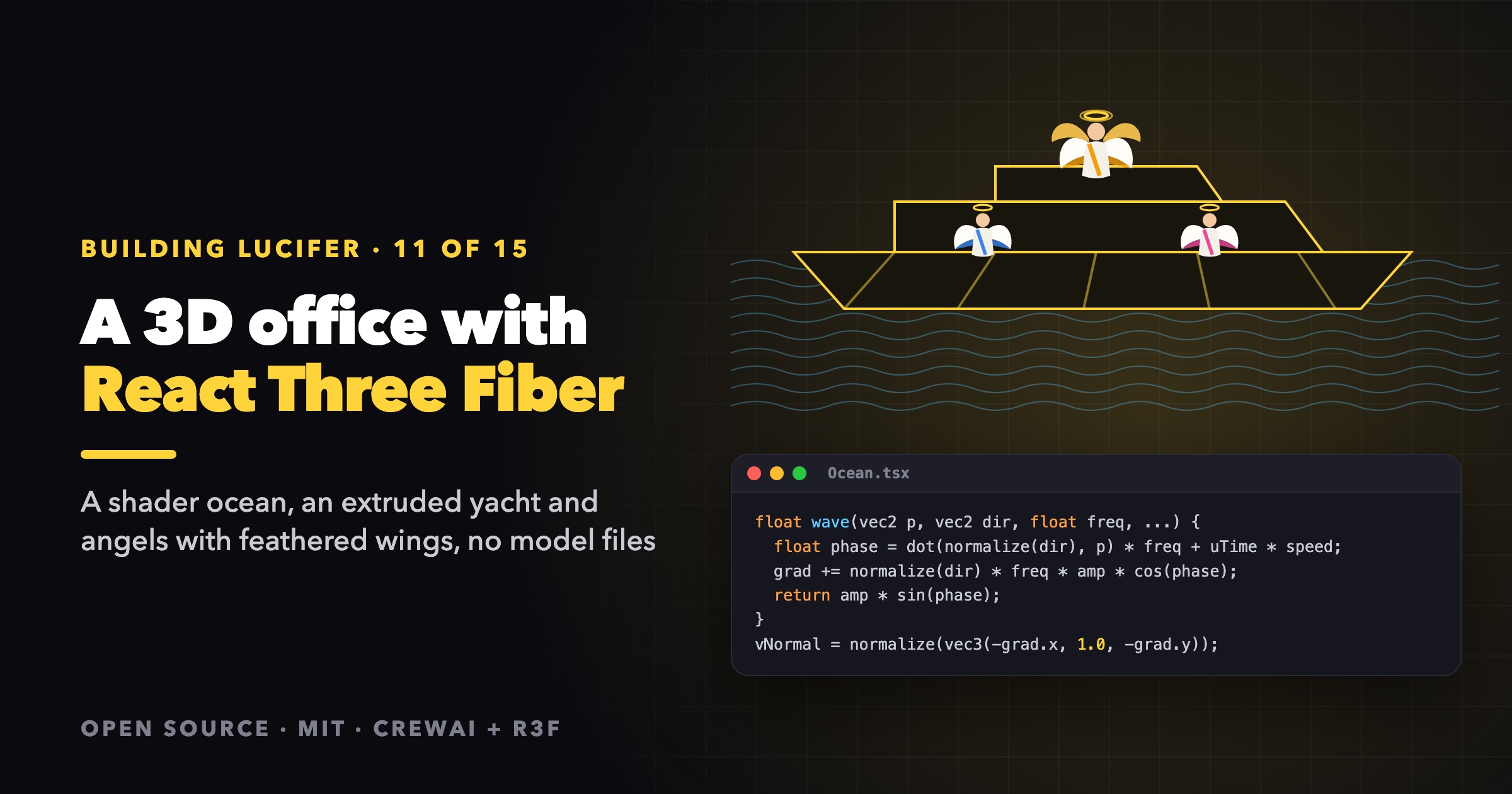
How Lucifer's office is built entirely in code, with no 3D model files: a shader ocean, an extruded yacht, angels with feathered wings, desks laid out from the org chart and name tags that never re-render React.
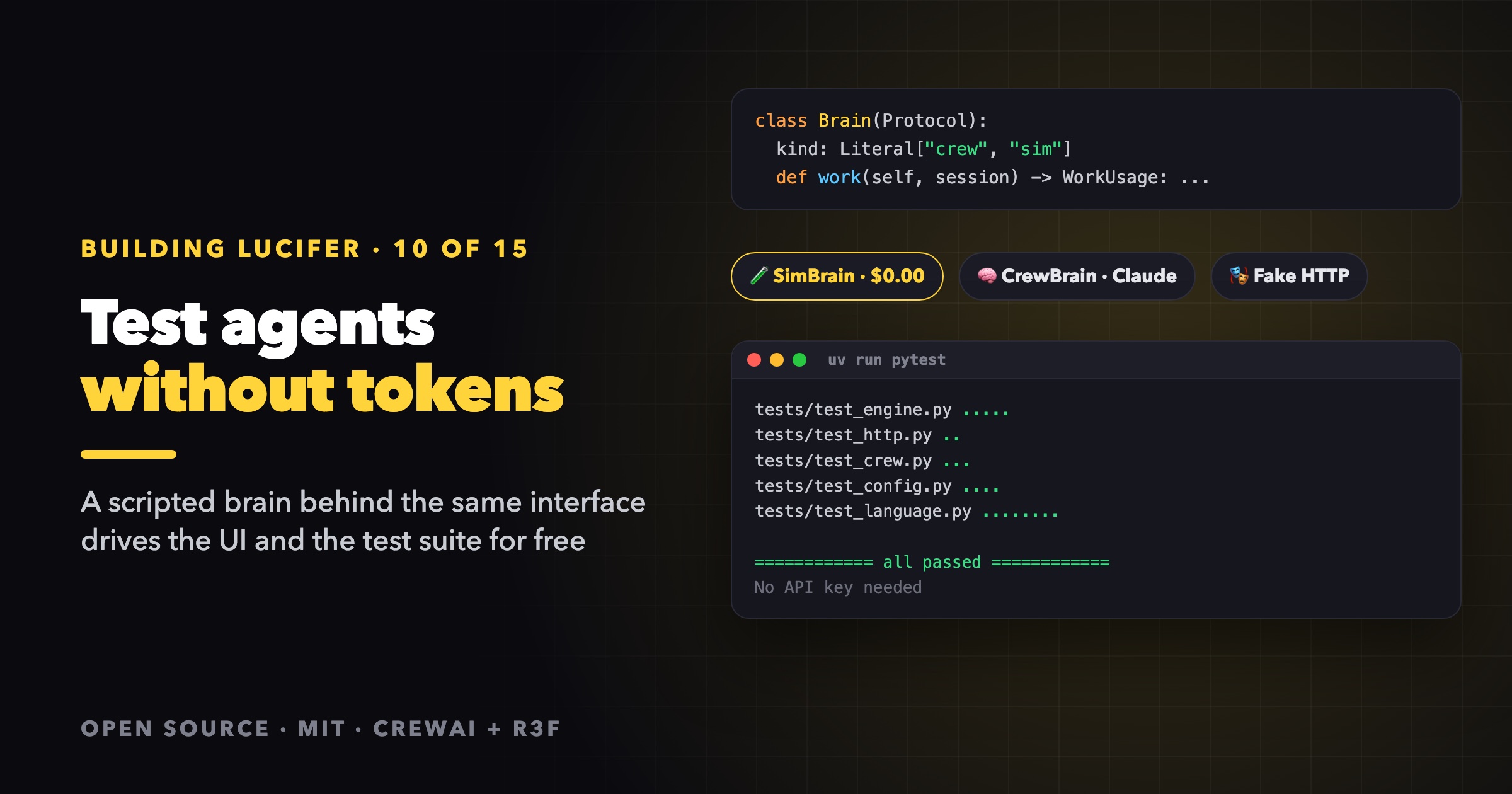
Lucifer's brains share one tiny interface, so a scripted brain can stand in for the LLM. It drives the whole UI for free and makes engine tests fast and deterministic. Here is how it works and how to test with it.
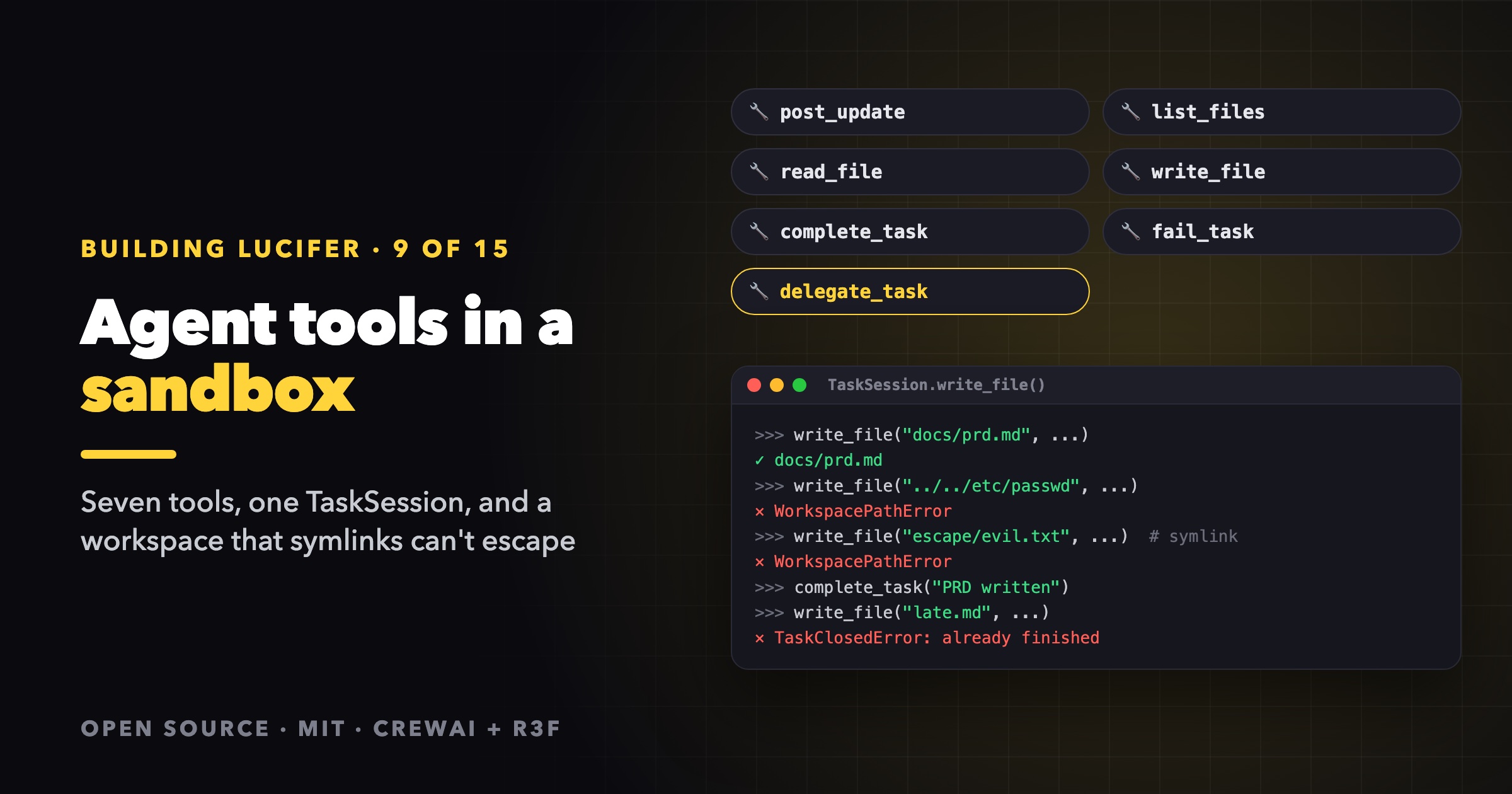
The seven tools Lucifer gives every agent, the TaskSession that enforces the org's rules, a path check that symlinks can't fool, and a step-by-step guide to adding a tool of your own.
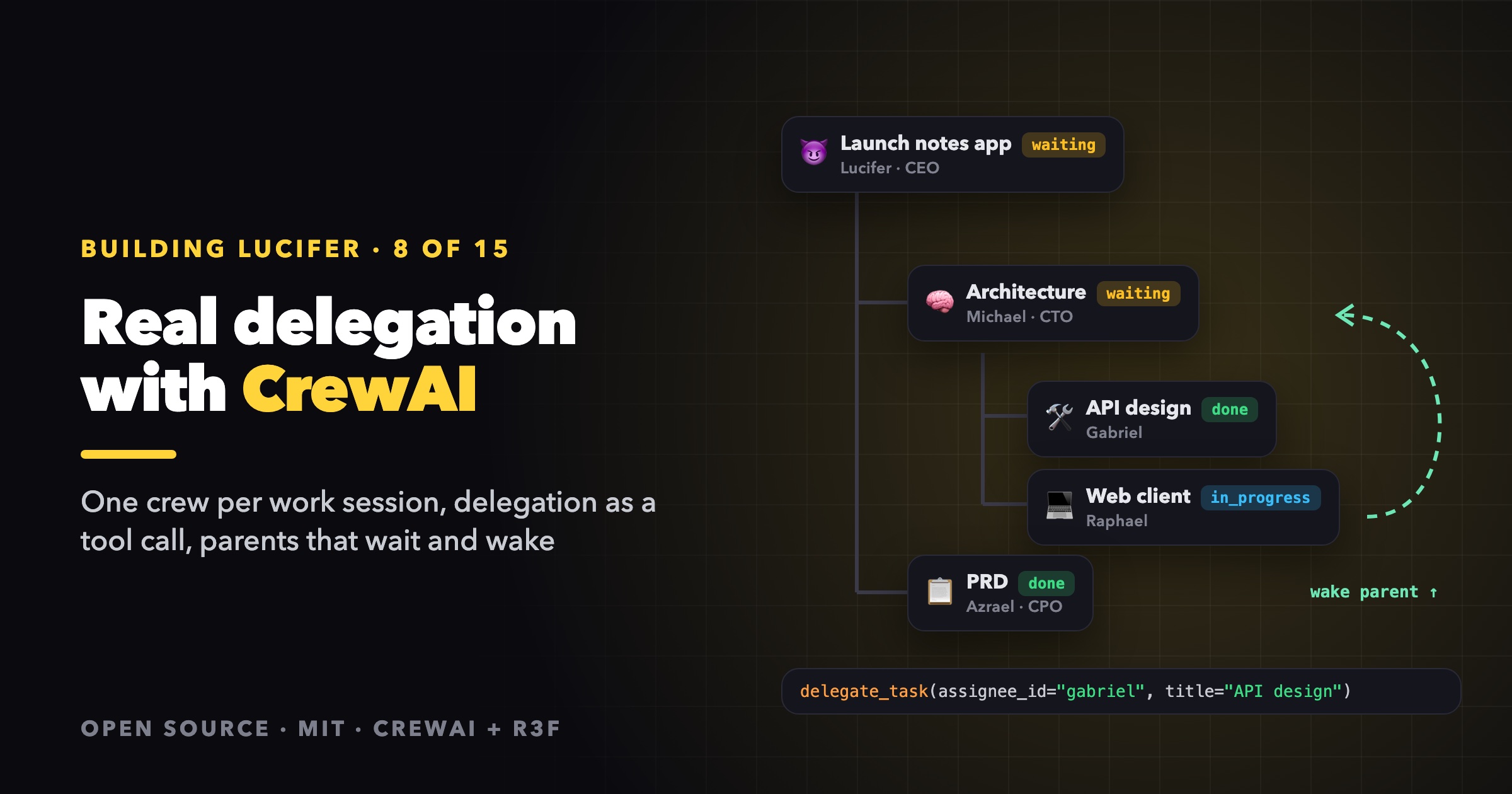
CrewAI's hierarchical process has one manager layer and hides its subtasks. Lucifer runs one crew per work session instead and turns delegation into a tool call that creates a real task. Here is how, and the race condition it had to avoid.
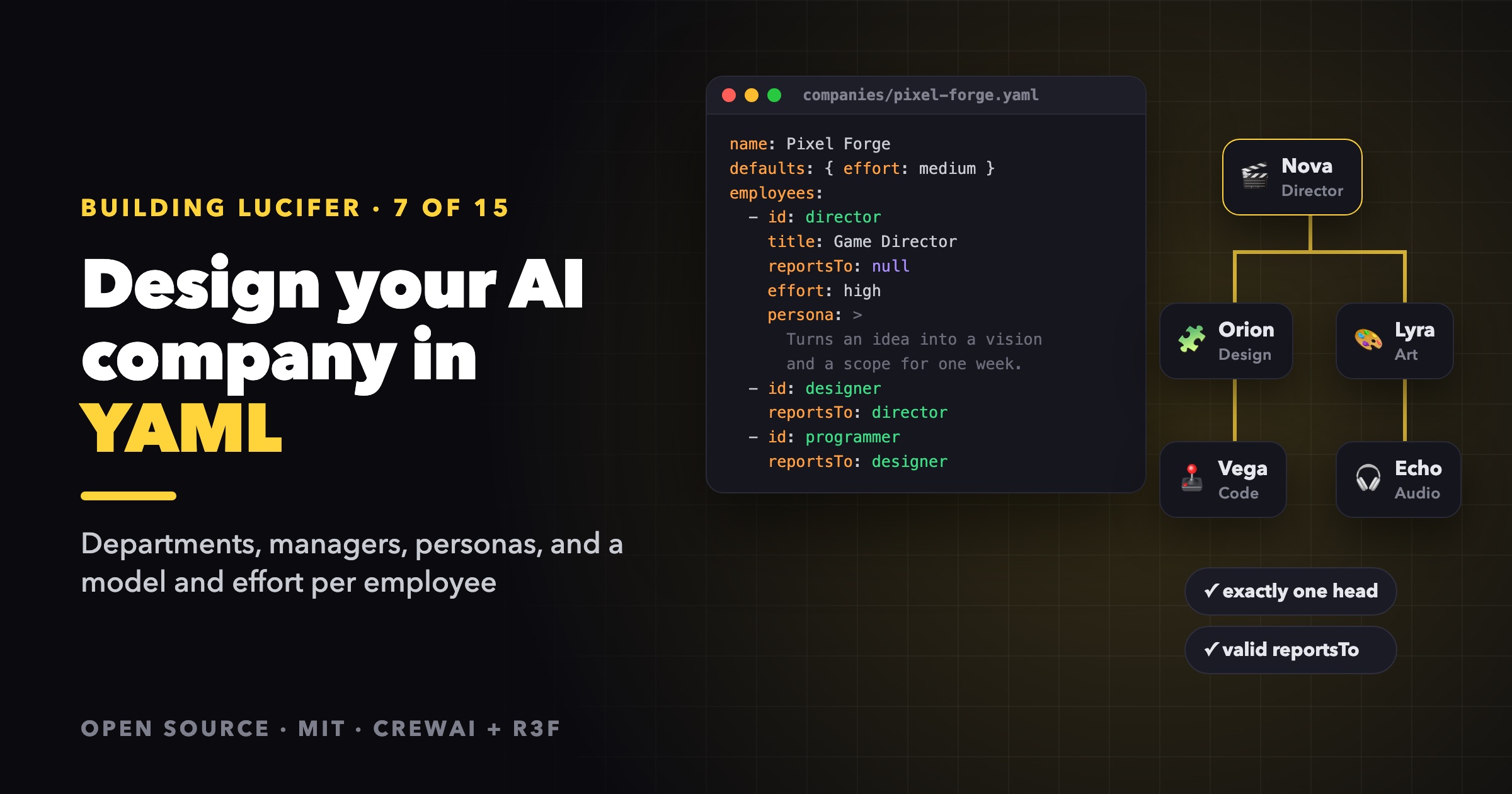
Lucifer's company is one YAML file: departments, managers, personas, and a model and effort per employee. Learn the format, then build a small game studio of your own and watch the office lay out its decks.
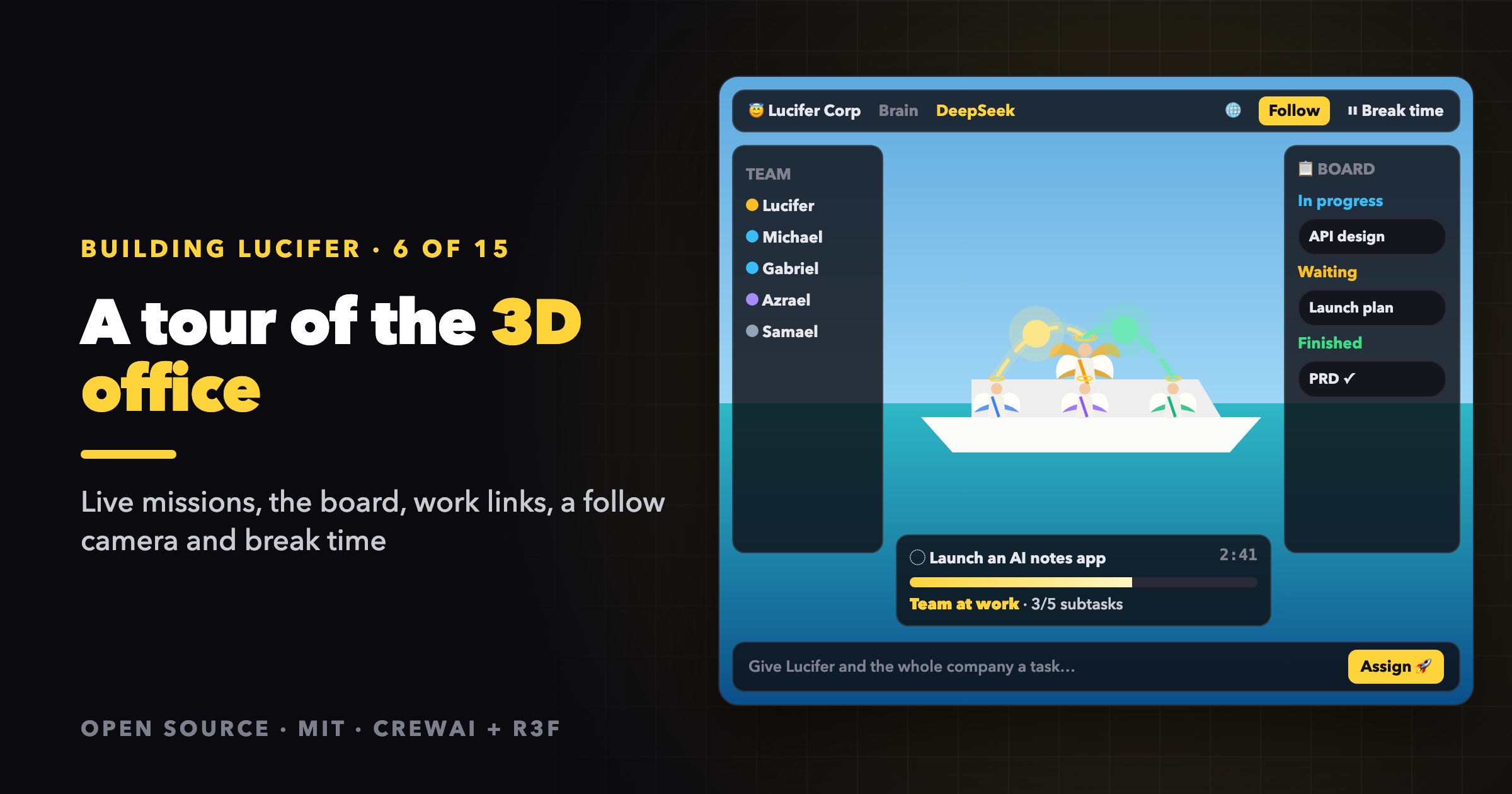
Everything you can do in the 3D office: live missions, the board and task drawers, glowing work links between angels, a camera that follows every hand-off, break time on the beach and the keyboard shortcuts.
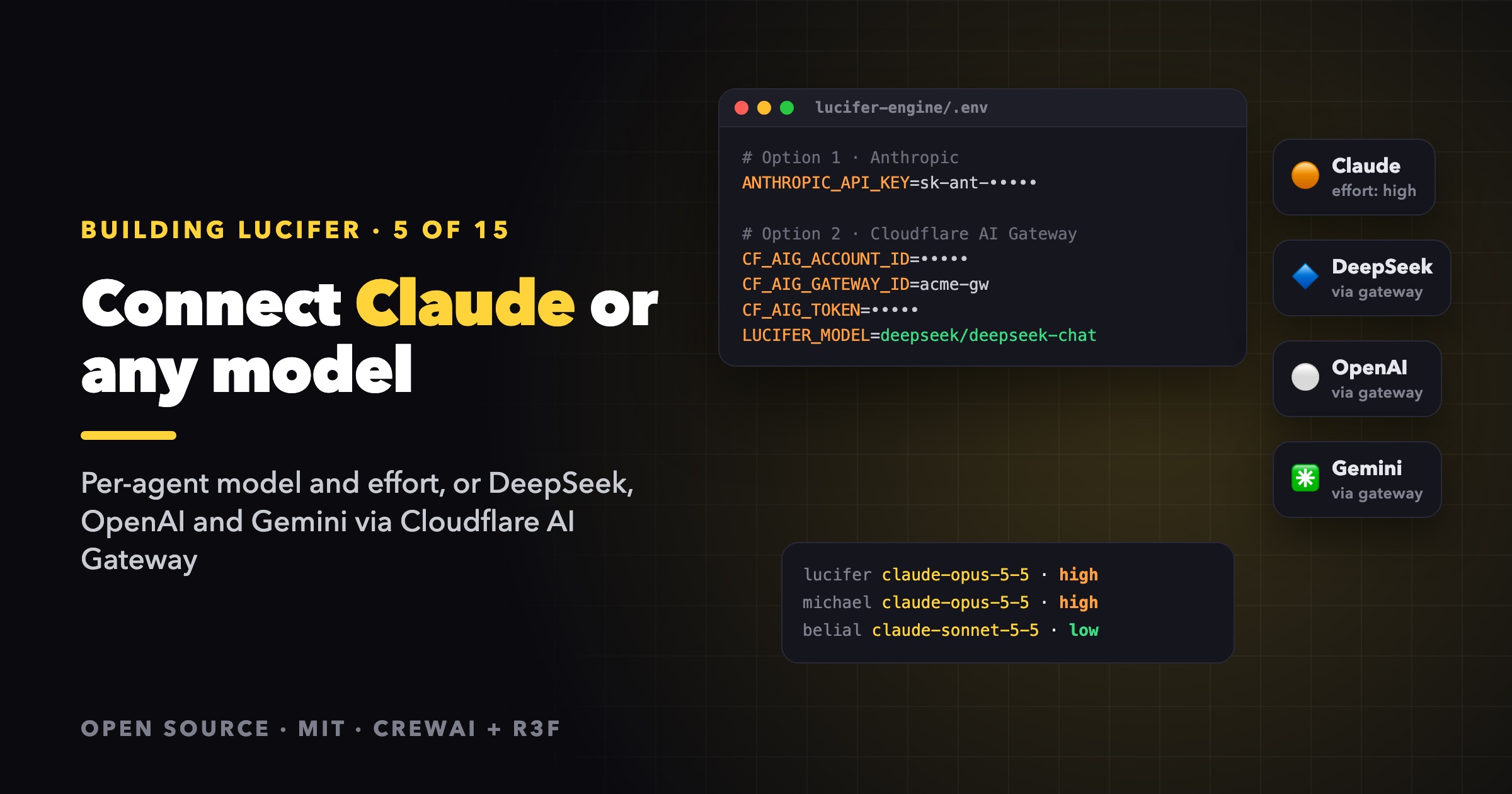
Put real agents to work: configure Anthropic Claude with per-agent model and effort, or route DeepSeek, OpenAI and Gemini through Cloudflare AI Gateway with BYOK, and keep your token bill under control.
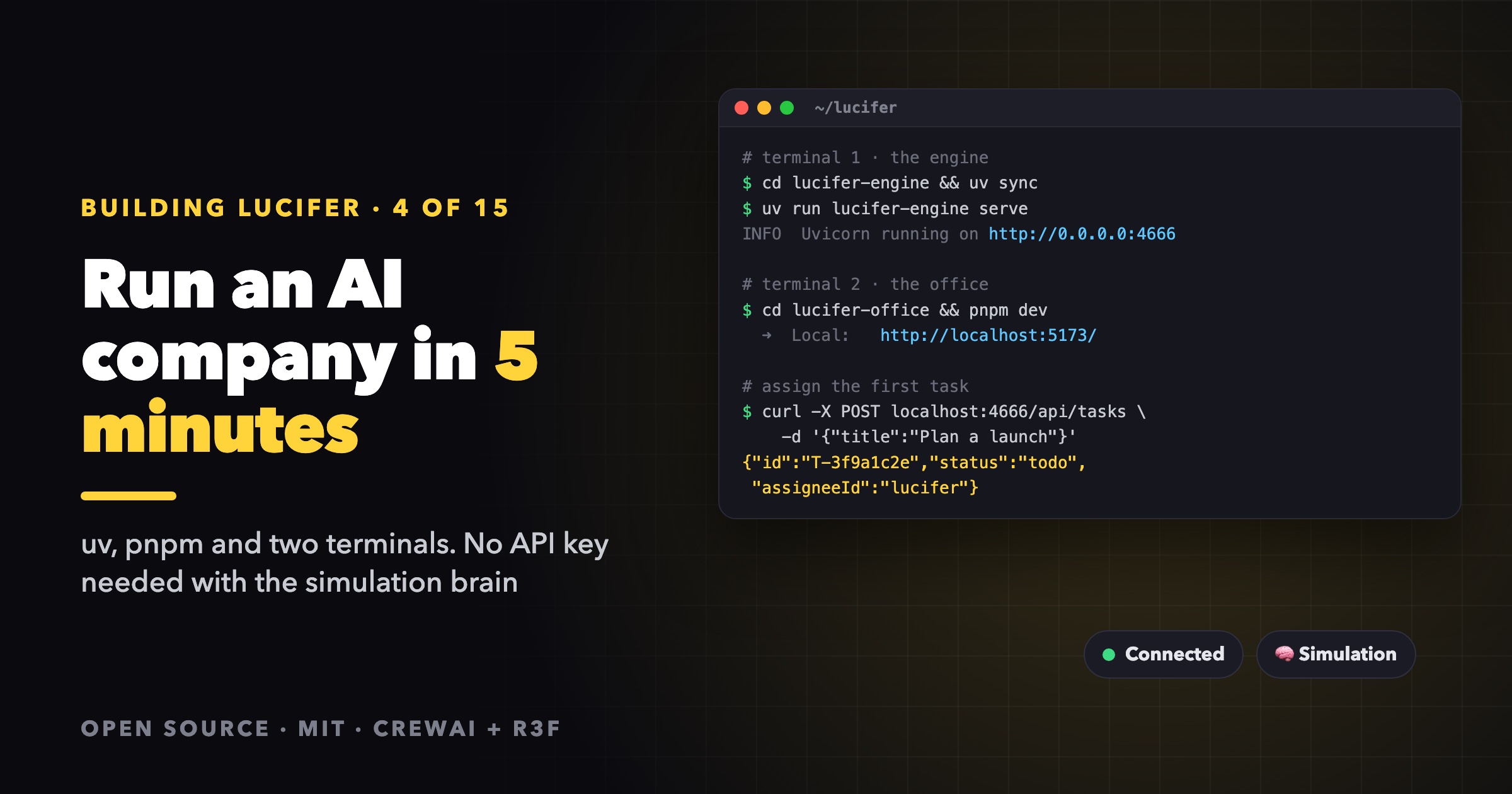
Install uv and pnpm, start the engine and the office, and give your first task to an AI company, for free, with the simulation brain. Then assign work from the office or with a single curl command.
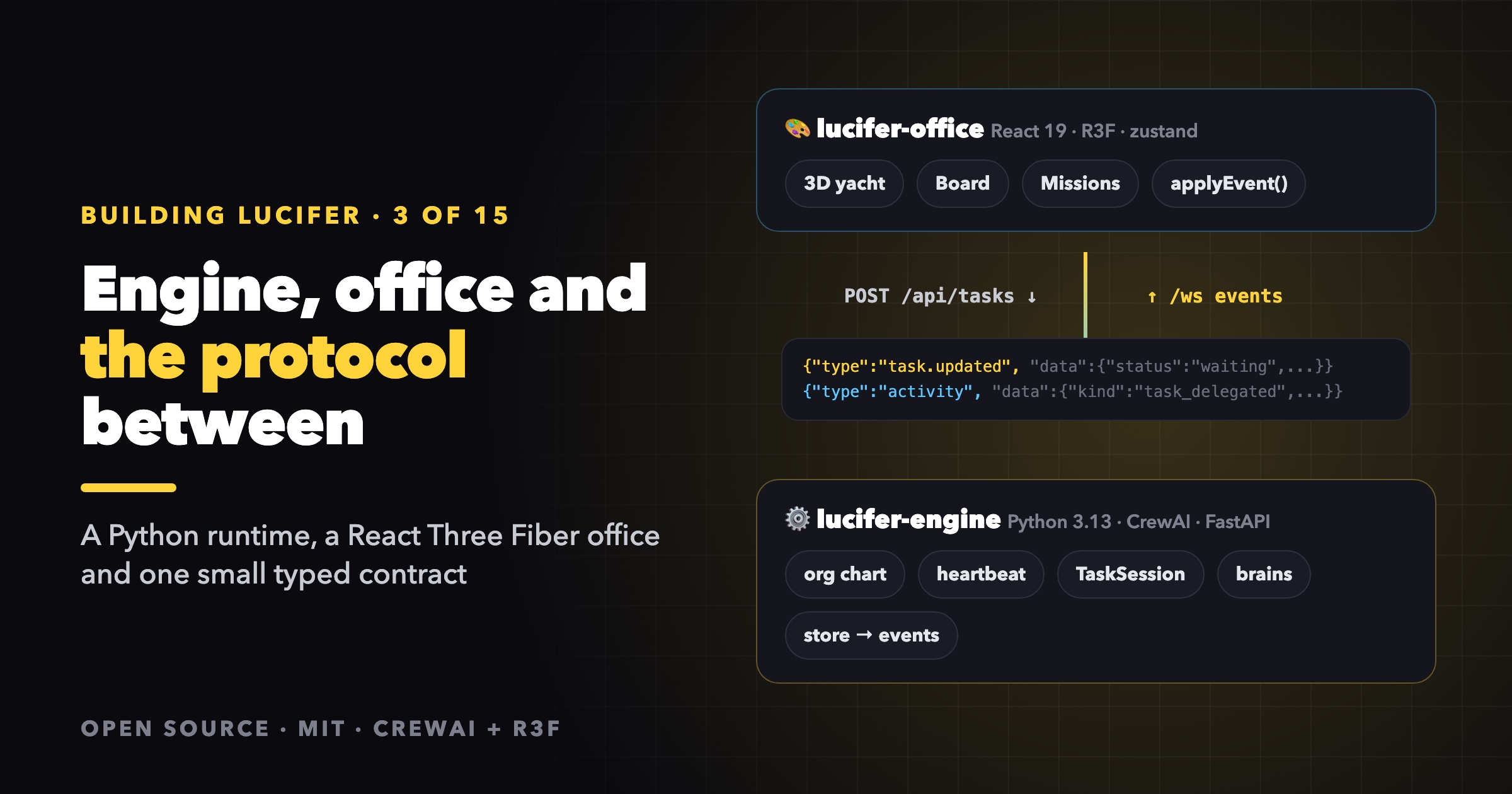
A tour of Lucifer's two packages: a Python engine (CrewAI, FastAPI) that runs the company and a React Three Fiber office that shows it, joined by a small typed REST and WebSocket protocol.
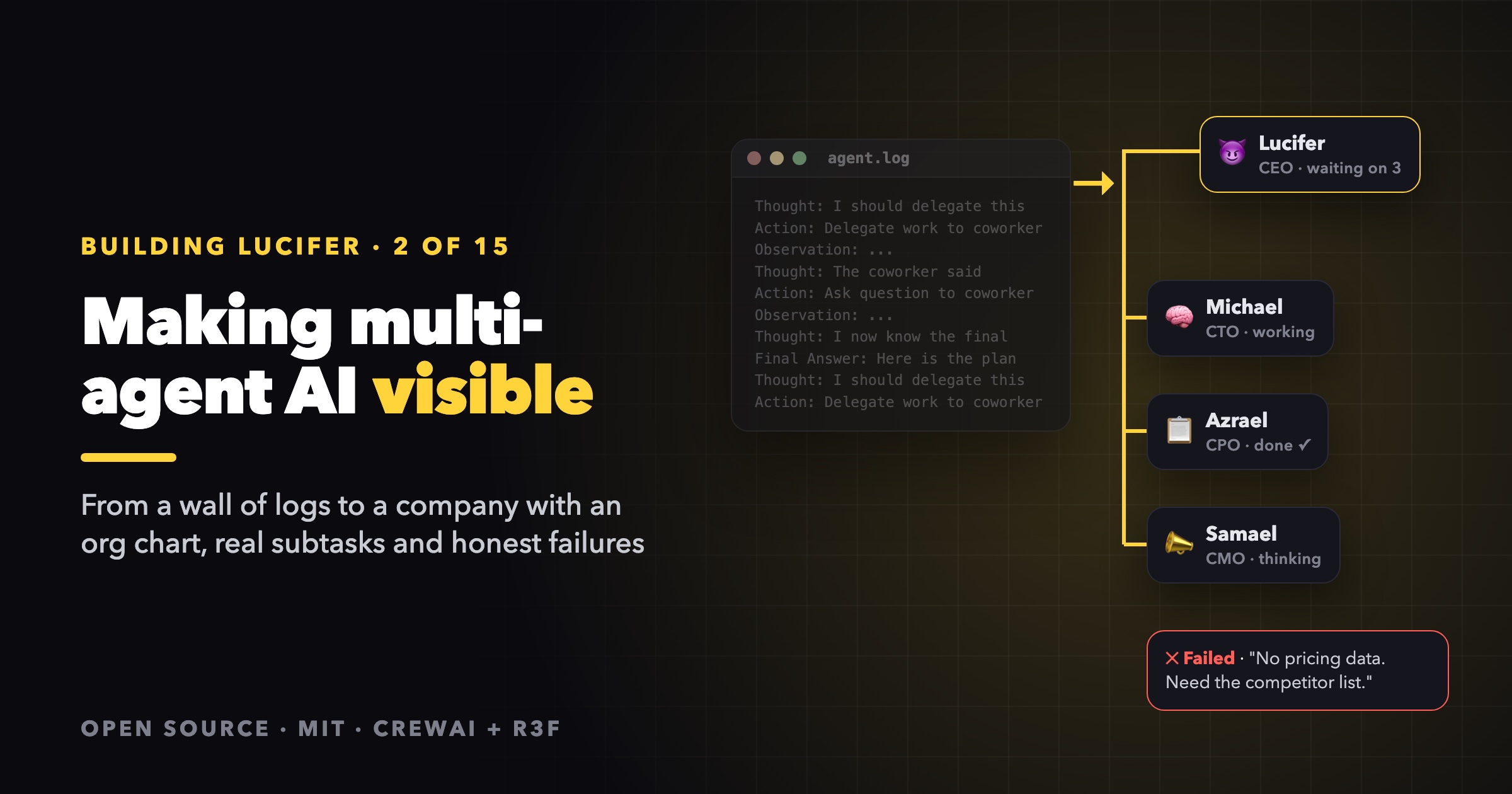
Multi-agent systems usually run as a wall of logs. Lucifer turns them into a company you can see: an org chart, real subtasks, honest failure reports and a 3D office. Here is the problem it solves and the design choices behind it.
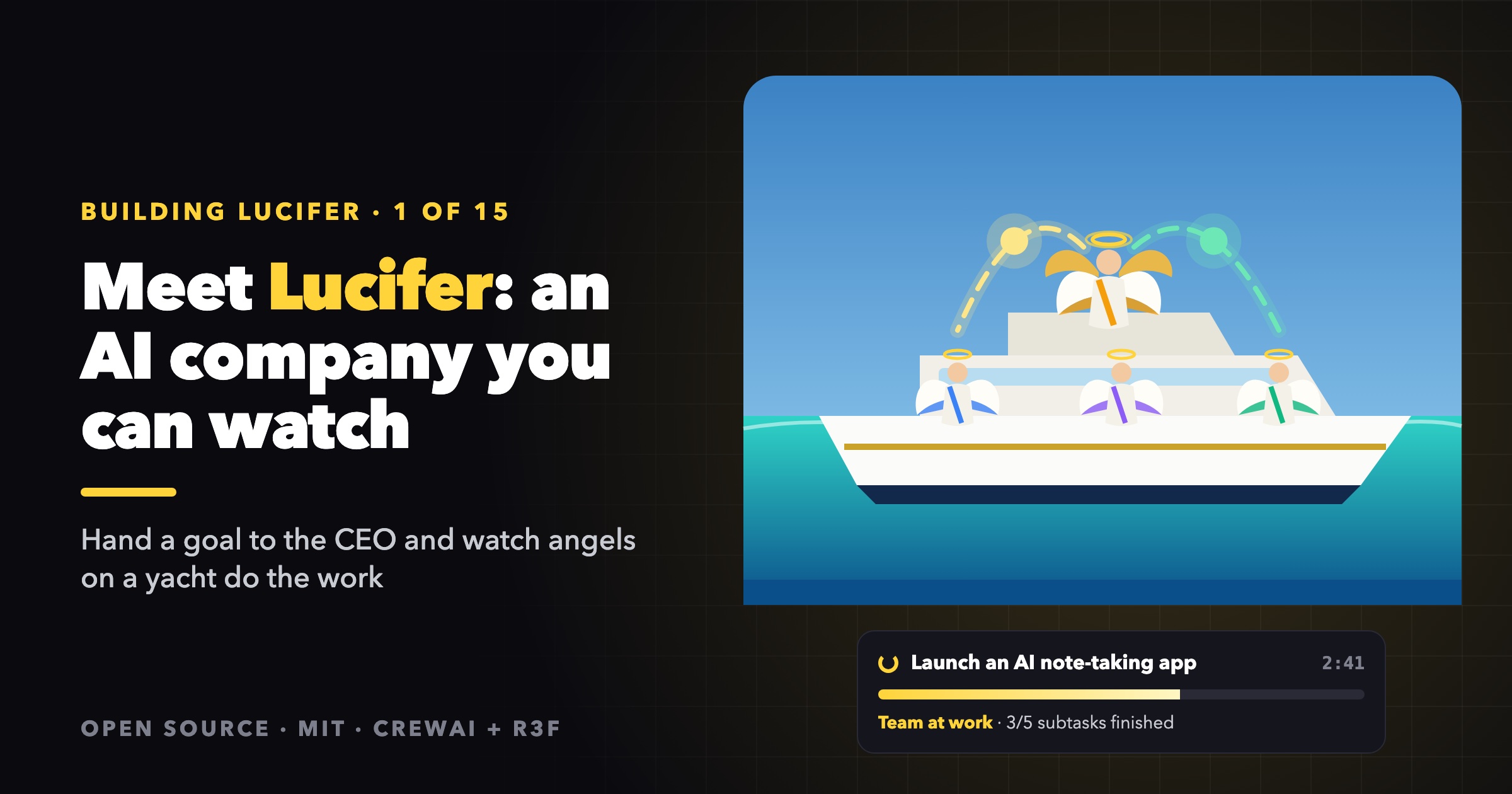
Lucifer is an MIT-licensed runtime for multi-agent companies with a 3D office to watch them in. Hand a goal to the CEO and watch angels on a yacht split it down a real org chart, do the work with real tools and report back.
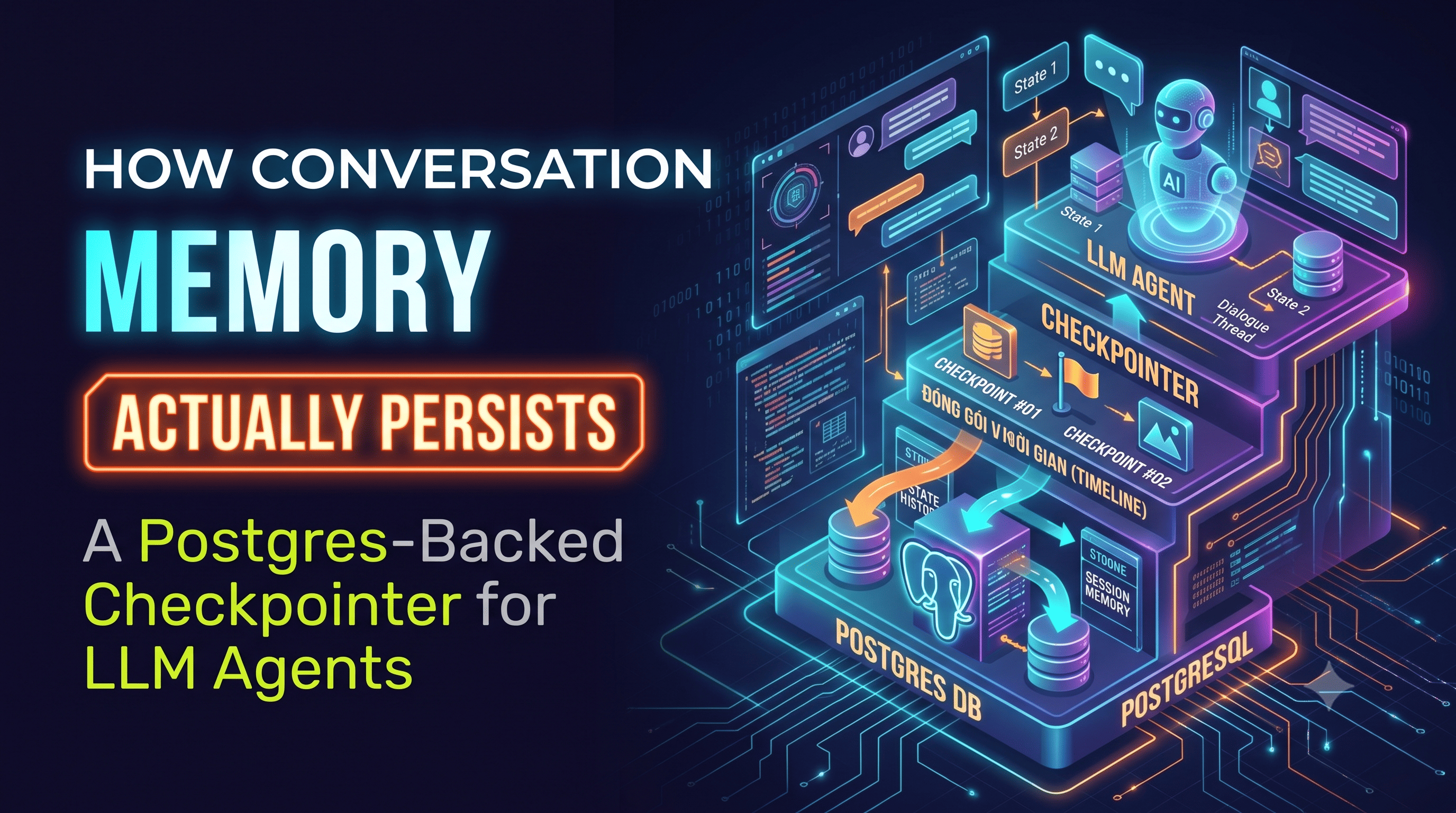
A deep dive into the checkpoint, blob, and write-ahead-log tables that let a stateful LLM agent survive a crash mid-execution and resume exactly where it left off, instead of replaying history from scratch.
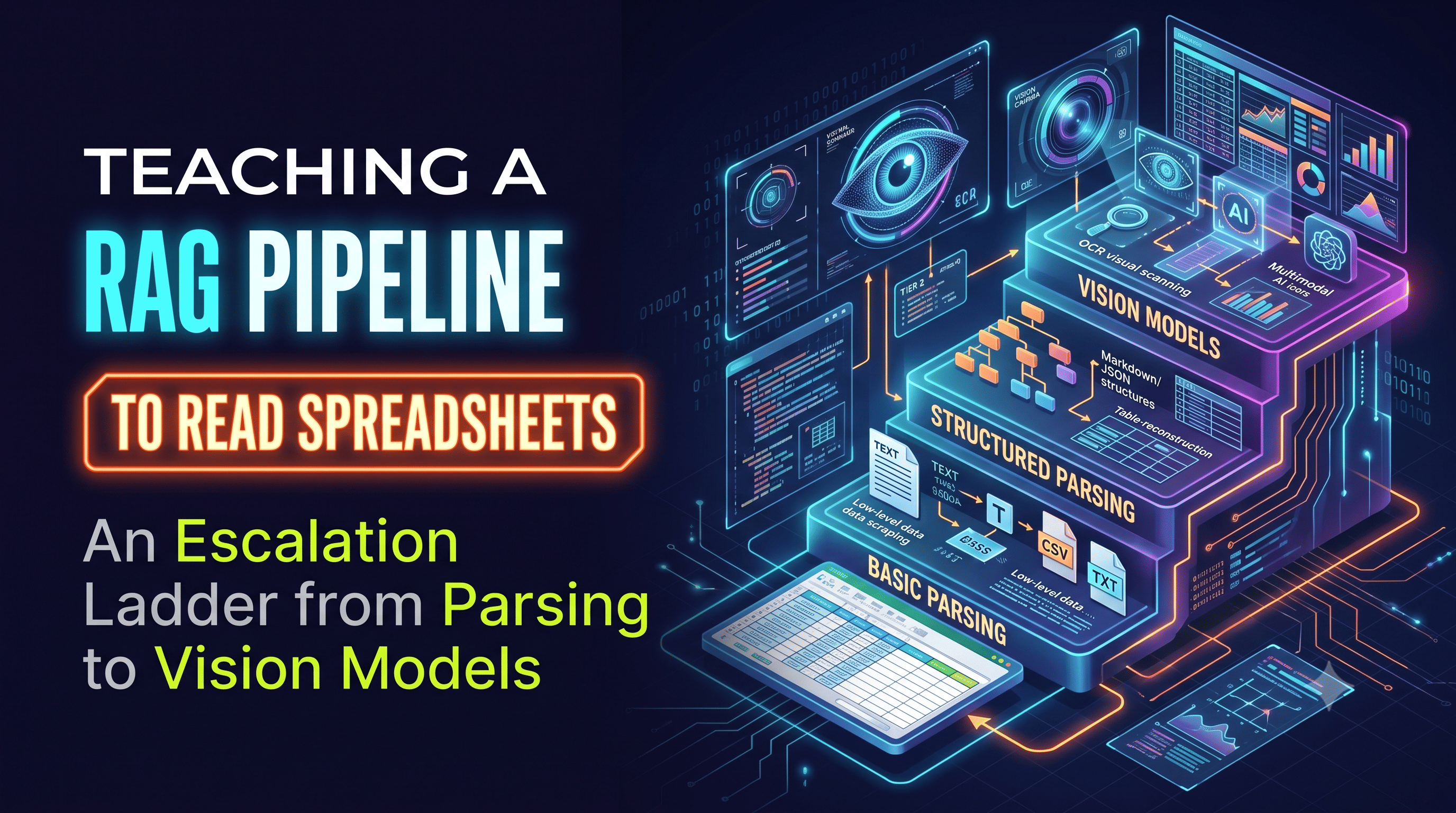
No spreadsheet parser covers every real-world file. Here's a four-rung fallback chain — deterministic parsing, LLM-assisted repair, sandboxed LLM-generated code, and vision models — with a validation gate between every rung.
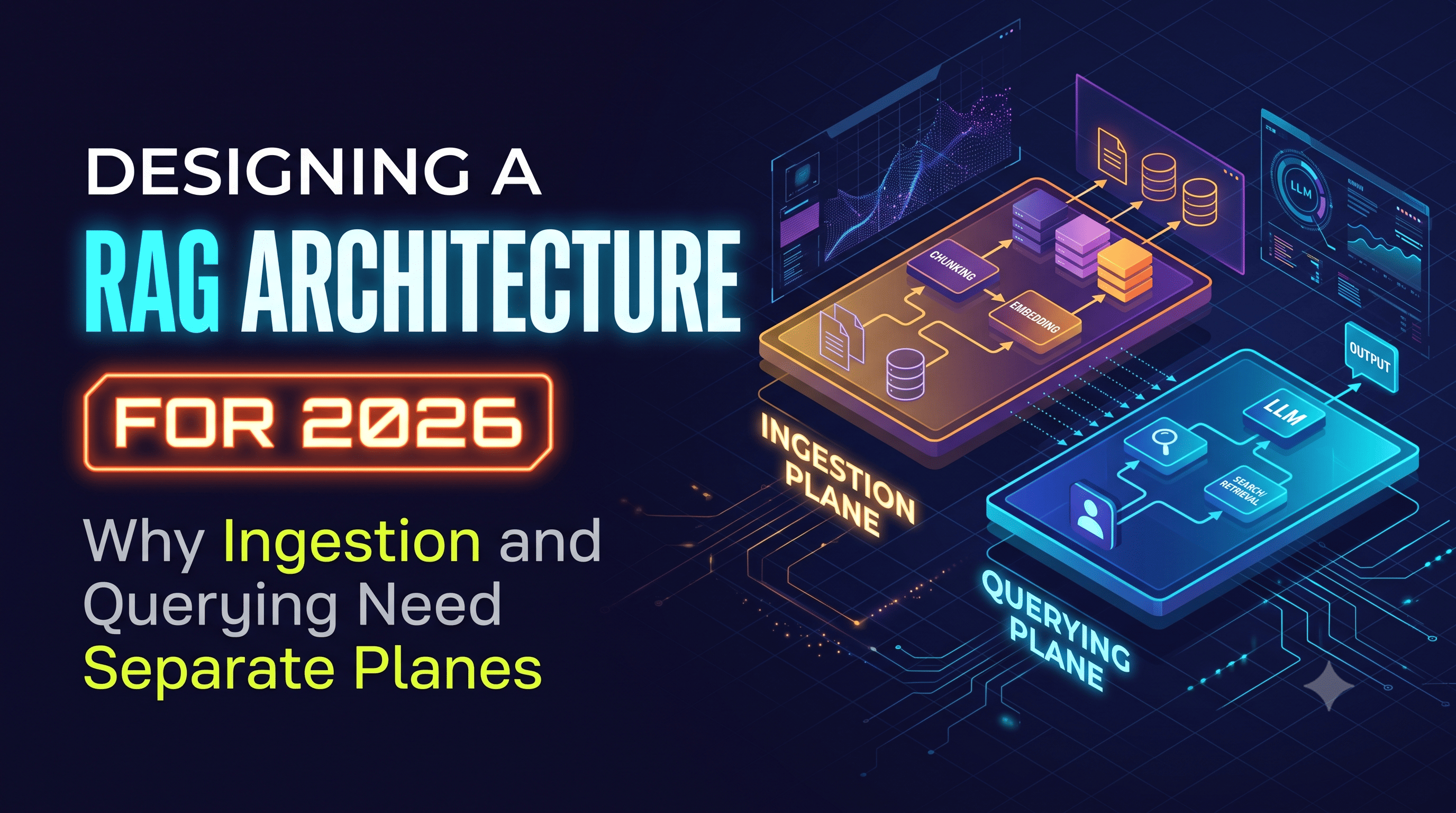
A field guide to structuring a production RAG platform as two independent planes — an async, throughput-bound ingest plane and a sync, latency-bound query plane — and why collapsing them causes failures that are hard to diagnose.
A complete guide to setting up a custom statusline for Claude Code CLI, displaying real-time information: model, git branch, context usage, token consumption, estimated cost, and quota remaining.
Complete guide to LangSmith for production AI applications. Master tracing, debugging, dataset management, automated testing, performance monitoring, cost tracking, and observability best practices.
Master advanced LangGraph patterns including human-in-the-loop workflows, distributed execution, checkpointing strategies, performance optimization, and comprehensive testing. Build production-grade AI systems with real-world examples.
Discover LangGraph's revolutionary approach to building stateful, multi-agent AI applications. Learn about graph-based workflows, state management, conditional routing, and checkpointing with practical production examples.
Deep dive into advanced LangChain concepts including LCEL composition patterns, memory systems, agent architectures, and production-ready error handling. Learn to build complex AI workflows with practical examples.
Master the core building blocks of LangChain from an engineering perspective. Learn about models, prompt templates, output parsers, document loaders, and text splitters with production-ready examples.
Discover how the LangChain ecosystem transforms AI application development with comprehensive frameworks for building, orchestrating, and monitoring LLM-powered systems. Learn about LangChain, LangGraph, and LangSmith from a practitioner's perspective.